
上海市社科联 2026 学术合作项目
科学食膳 赋能健康
第三届“饮食营养与健康专家论坛暨营养与疾病防治”学术会议
药食同源食材与中医体质辨识相结合的“治未病”膳食干预模式探讨

(药食同源食材与中医体质辨识相结合的“治未病”膳食干预模式探讨 获得优秀论文证书)
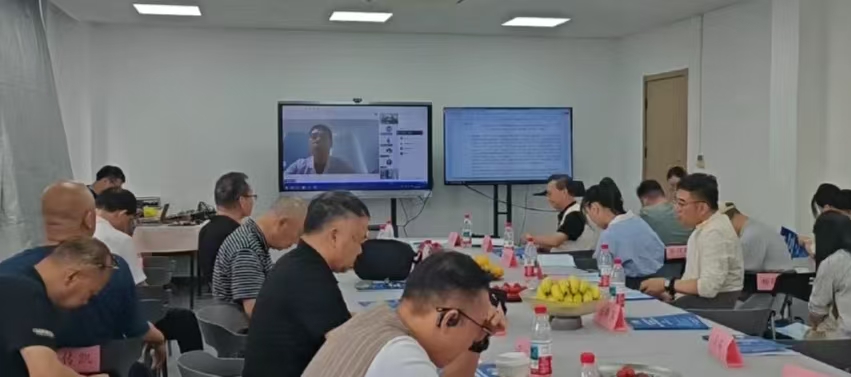
(上海食文化研究会 营养与药食同源专业委员会 曹磐毅 主任医师远程视频论述研讨 )
药食同源食材与中医体质辨识相结合的“治未病”膳食干预模式探讨
上海食文化研究会 营养与药食同源专业委员会 曹磐毅
【摘要】“治未病”是中医健康管理的核心理念,契合现代疾病预防与主动健康发展趋势。人群体质偏颇是亚健康滋生、慢性病高发的重要内在基础,而统一化、普适性的膳食模式难以适配个体化健康调理需求。药食同源食材兼具食用安全性与药性调理优势,是非药物健康干预的核心载体。将中医体质辨识体系与药食同源膳食应用相结合,构建辨证施食、因人施策的个体化“治未病”膳食干预新模式。通过剖析九种体质偏颇特征与对应食药物质调理逻辑,探讨体质辨识赋能精准膳食干预的应用价值、现存问题与优化路径。研究表明,体质辨识+药食同源的融合模式,可实现膳食干预从“大众普养”向“个体精养”升级,有效纠正体质偏差、阻断疾病前驱状态,为国民慢病预防与健康调养提供科学可行的非药物干预方案。
【关键词】药食同源 中医体质辨识 治未病 膳食干预 非药物健康管理
【论述研讨】现代大众膳食普遍存在盲目进补、跟风养生、饮食失衡等问题,同质化膳食调养忽视个体体
质差异,极易出现虚不受补、滋腻碍胃、寒热相悖等养生反效果,难以真正实现防病健体的目的。中医体质学说将人体分为平和质、气虚质、阳虚质、阴虚质、痰湿质、湿热质、血瘀质、气郁质、特禀质九类,不同体质的脏腑禀赋、寒热虚实、代谢特征存在显著差异,决定膳食干预必须遵循辨证适配原则。药食同源食材性味归经明确、寒热属性清晰,可精准匹配不同体质的调理需求。针对气虚、阳虚偏颇人群,可选用温补益气类食药物质固本培元;针对痰湿、湿热体质,可采用健脾祛湿、清热化浊食材代谢调衡;针对气郁、血瘀体质,依托行气活血类食材疏通机体机能。以体质辨识为前置依据,能够彻底规避传统盲目食补弊端,实现“寒者温之、热者清之、虚者补之、实者泻之”的精准膳食干预,有效改善慢性低度失衡、亚健康状态,从源头降低慢病发病概率。当前该模式落地仍存在短板:大众体质认知薄弱、辨证施食科普不足;体质评估多依赖经验判断,标准化、量化筛查体系不完善;药食同源膳食干预缺乏常态化随访管理,干预持续性与规范性不足,制约“治未病”成效落地。
【总结】药食同源食材应用与中医体质辨识的深度融合,是传统食养现代化、精准化发展的重要创新。该模式打破了传统大众养生的同质化局限,构建了“先辨体质、再施膳食、精准调衡、防病为先”的新型健康干预体系,完美契合中医“治未病”核心思想。在全民主动健康时代,持续推进体质辨识标准化、膳食配伍科学化、干预服务常态化,能够充分发挥药食同源非药物干预优势,精准纠正人群体质偏颇,筑牢国民健康根基,为慢性病预防、亚健康调理与全民健康管理提供可持续、可推广的中式膳食干预新模式。
地址:上海食文化研究会会议室 会议时间:2026 年 9 月 17 日
Shanghai Social Science Federation 2026 Academic Cooperation Project
Scientific diet empowers health
The 3rd "Diet, Nutrition and Health Expert Forum and Nutrition and Disease Prevention and
Control" Academic Conference
Discussion on the dietary intervention model of "pre-disease treatment" that combines medicinal and
food-homous ingredients and traditional Chinese medicine constitution identification
Shanghai Food Culture Research Association Professional Committee on the Same Origin of
Nutrition and Medicine and Food Cao Panyi
【Abstract】"Cure the disease" is the core concept of traditional Chinese medicine health management, which is in
line with the development trend of modern disease prevention and active health. Human group quality bias is an important intrinsic foundation for the growth of sub-health and the high incidence of chronic diseases, and the unified and universal diet model is difficult to adapt to the needs of individualised health conditioning. Medicinal food ingredients have the advantages of edible safety and medicinal conditioning, and are the core carriers of non-drug health intervention. Combine the constitution identification system of traditional Chinese medicine with the application of the same-source diet of medicine and food, and build a new model of individualised "cure of non-disease" diet intervention that identifies and treats food according to people. By analysing the characteristics of nine constitutional biases and the quality conditioning logic of corresponding food drugs, we will explore the application value, existing problems and optimisation paths of constitution identification to empower accurate dietary intervention. Research shows that the integration model of constitution identification and the same origin of medicine and food can realise the upgrade of dietary intervention from "popular health care" to "individual care", effectively correct physical deviation, block the precursor state of disease, and provide a scientific and feasible non-drug intervention plan
for the prevention of chronic diseases and health recuperation.
【Keyword】The same origin of medicine and food, traditional Chinese medicine constitution identification, treatment of non-disease, dietary intervention, non-drug health management
【Discussion】In modern people's diet, there are common problems such as blind tonic, following the trend of
health, and unbalanced diet. Homogeneous diet and conditioning ignore the differences in individual constitution, which is very easy to have health effects such as deficiency and not tonic, greasy stomach, cold and heat, and it is difficult to truly achieve the purpose of preventing diseases and strengthening the body. The constitution doctrine of traditional Chinese medicine divides the human body into nine categories: peace, qi deficiency, yang deficiency, yin deficiency, phlegm and wet, wet and hot, blood stasis, qi depression, and special endowment. There are significant differences in the internal endowment, cold and heat, and metabolic characteristics of different constitutions, which determines that dietary intervention must follow the principle of discrimination and adaptation. The taste of the ingredients of the same origin as medicinal food is clear, and the cold and heat properties are clear, which can accurately match the conditioning needs of different constitutions. For people with qi deficiency and yang deficiency, you can choose to use warm and beneficial qi food and drugs to strengthen the original; for phlegm, wet and hot constitution, you can use the metabolism of food to strengthen the spleen and dispel moisture, clear heat and turbidity; for qi depression and blood stasis constitution, rely on qi and blood ingredients to dredge the body function. Based on the preliminary basis of constitution identification, it can completely avoid the disadvantages of traditional blind food tonic, and realise the precise diet intervention of "warming the cold, clearing the hot, supplementing the deficiency, and diarrhoea", effectively improving the chronic low-degree imbalance and sub-health status, and reducing the probability of chronic diseases from the source. At present, there are still shortcomings in the implementation of this model: the public's physical cognition is weak, and the science of discrimination and food popularisation is insufficient; physical
evaluation relies more on empirical judgement, and the standardised and quantitative screening system is not perfect; the dietary intervention of the same origin of medicine and food lacks normalised follow-up management, and the continuity and standardisation of the intervention are insufficient, which restricts the effectiveness of "pre-disease treatment".
【Summary】The deep integration of the application of medicinal food and food of the same origin and theidentification of the constitution of traditional Chinese medicine is an important innovation for the modernisation and precise development of traditional food. This model breaks the homogenisation limitations of traditional mass health care and builds a new health interventionsystem of "first discerning constitution, then applying diet, accurate balance, and disease prevention first", which is perfectly in line with the core idea of "curing diseases" in traditional Chinese medicine. In the era of national active health, we should continue to promote the standardisation of constitution identification, the scientificization of meal matching, and the normalisation of intervention services,
which can give full play to the advantages of non-drug intervention of the same origin of medicine and food, accurately correct the bias of human groups, lay a solid foundation for national health, andprovide sustainable for chronic disease prevention, sub-health conditioning and national health management. , a new model of Chinese dietary intervention that can be popularised.
Address: Conference Room of Shanghai Food Culture Research Association Meeting
Time: September 17, 2026
审撰 :食药物质 健康中国栏目组 愚晏
摄影 :冯赟超 陈金宝
翻译 :国际食药物质与健康产业联盟 执行秘书长 孙丽
校对:国际疾病非药物干预科学应用联盟(中国代表处)执行秘书长 吴玲

 沪公网安备31011502404498号